

 Kevin Donnelly


Unstoppable Change and What Comes Next
 RETTC : May 19, 2026
Ahead of OPTECH 2026, three leaders share where technology is delivering real impact and what is coming next. Technology is redefining how housing is...
The pace of disruption in real estate and technology makes C-suite involvement and strategy more consequential than ever. At OPTECH 2025, RETTC convened the inaugural Leadership Circle, an invitation-only gathering of over 200 C-suite executives and senior decision makers to talk about how to best align tech strategy with overall business goals.
The program was led by the Leadership Circle Co-Chairs, Julie Smith, CAO of The Bozzuto Group, Cindy Fisher, President of KETTLER, and Walt Smith, CEO of Avenue5 Residential.
The high-impact forum cut across the OPTECH program, providing an opportunity for leaders to step back from the day-to-day and created space for peer exchange, trusted relationship building, and helped drive strategic clarity across real estate, technology, and leadership priorities.
Throughout the Leadership Circle, attendees were asked to provide their insights regarding current and future technology priorities and objectives. The findings provide meaningful insight into how leadership across rental housing views technology, the opportunities presented, and the risks that must be accounted for in its use.
This report compiles themes that highlight growing opportunities in automation, data, and AI, along with the role they play in driving efficiency, insight, and scale. These themes reinforce a consistent truth: technology delivers the greatest value when it strengthens day-to-day operations and enables teams to deliver a more responsive, reliable resident experience. These insights will guide strategy and shape decision-making in the year ahead.
In case studies presented by the Leadership Circle Co-Chairs, real-world examples were presented that highlighted how leading multifamily operators leverage technology to improve efficiency, enhance resident experiences, and guide strategic decisions. These examples provided concrete evidence that supports the takeaways of the event and prove that technology delivers the greatest value when it supports organizational priorities and enables teams to act proactively in meeting the evolving needs of residents and the market.
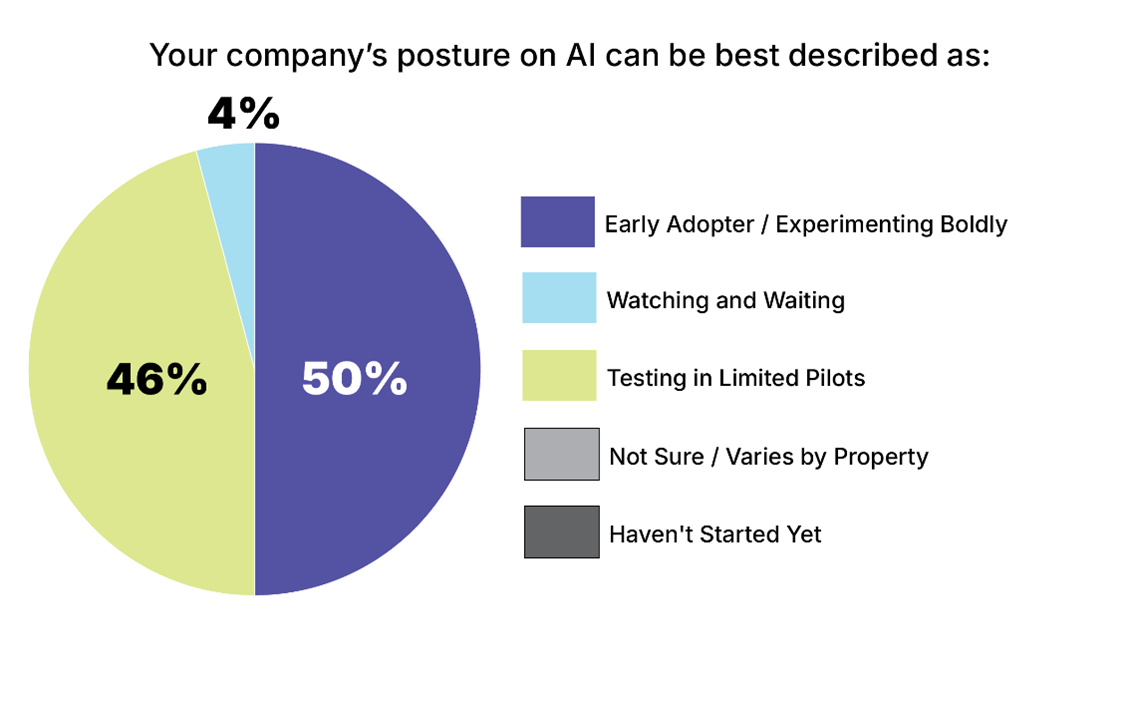
Multifamily housing investment in technology has recently spiked; therefore, we asked Leadership Circle attendees where they stand regarding their own companies’ use of AI. Half of the respondents report they are feeling comfortable and experimenting boldly with AI, recognizing its potential to improve efficiency, decision-making, and resident experience. The other half of respondents report testing in limited pilots or watching and waiting. This underscores that accelerating digital transformation goes hand in hand with the need for risk-conscious innovation, as heightened investment brings increased focus on security, compliance, and governance.
Successful digital transformation requires balancing innovation with governance and risk management. When evaluating and investing in new technologies, security, privacy, and operational risk considerations should be embedded into technology roadmaps and supported by established frameworks such as the RETTC AI Governance Framework to ensure responsible adoption.
 Source: Leadership Circle in-session polling, OPTECH 2025
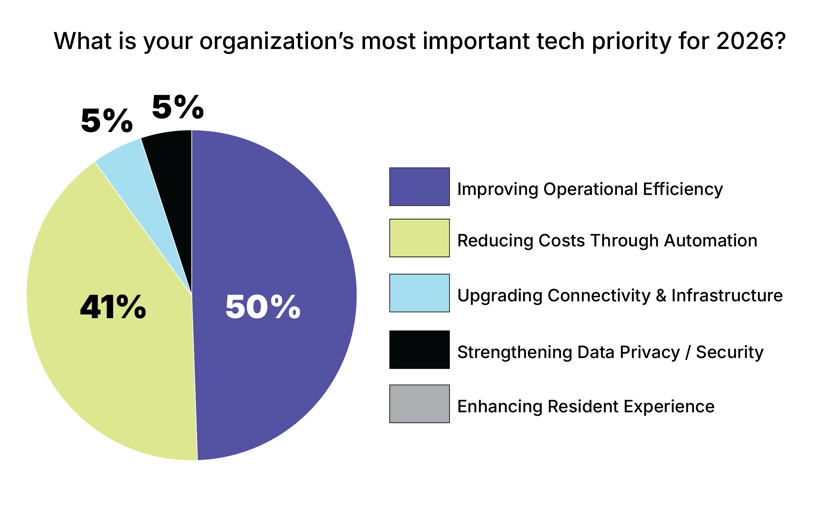
Most of the respondents report that they are prioritizing operational efficiency and cost reduction as their central technology objectives for 2026. Beyond just automation, respondents are focusing on solutions that streamline workflows, reduce labor-intensive processes, and optimize resource allocation. These priorities indicate a shift toward technologies that deliver measurable, tangible outcomes.
Solutions that integrate seamlessly into existing operations and demonstrate a direct impact on efficiency and cost reduction will see the highest adoption. This underscores the importance of aligning technology strategy with operational goals and emphasizing measurable performance improvements over innovation.
 Source: Leadership Circle in-session polling, OPTECH 2025
|
Kettler Management Inc. implemented an AI-driven invoice automation solution to address inefficiencies in its accounts payable process. The organization processed nearly 8,000 invoices per month from multiple sources, including Excel files, PDFs, emails, vendor portals, and hard copies. Manual invoice creation by property teams led to significant inefficiencies such as 5- to 7-day billing cycles, frequent data entry errors, lost or misplaced invoices, and delayed payments.
|
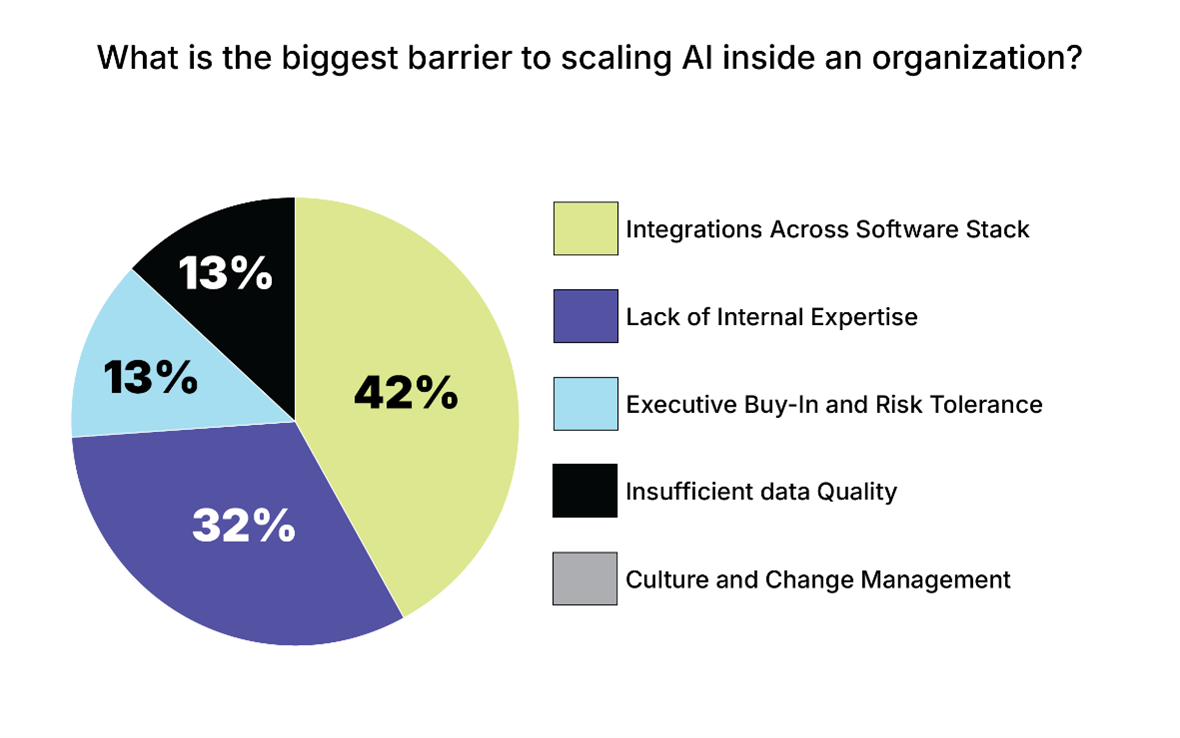
Fragmented software ecosystems significantly slow AI adoption. Even with AI tools available, disconnected systems limit the ability to consolidate data, generate actionable insights, and execute automated workflows at scale. Respondents believe this barrier can be overcome with infrastructure that supports integrated solutions.
Investing in integration strategies and data standardization can unlock AI’s full potential. Prioritizing solutions that enhance existing workflows rather than introducing disruption will accelerate adoption, reduce implementation risk, and ensure that AI contributes to measurable operational outcomes. Leveraging RETTC MITS data models facilitate standardized data structures that make AI adoption scalable, reliable, and actionable.
 Source: Leadership Circle in-session polling, OPTECH 2025
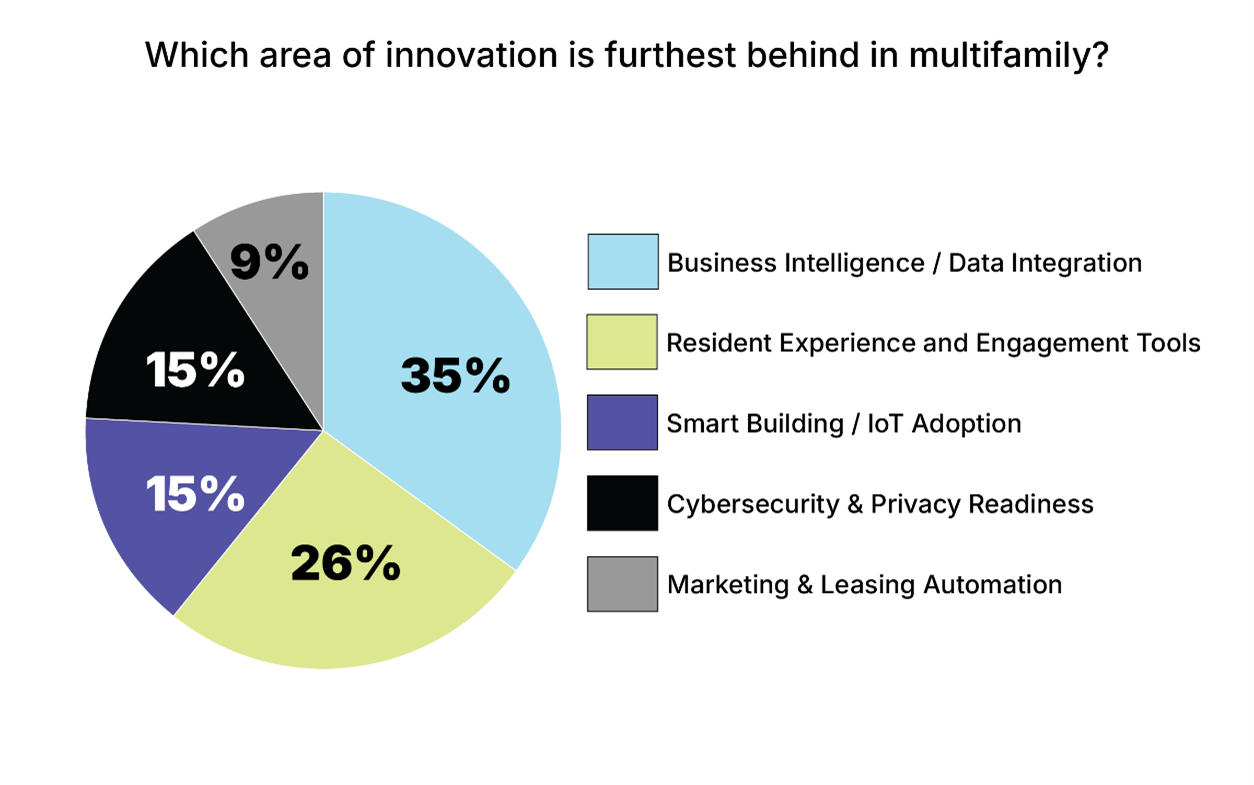
Attendees were asked about where they believe there is a lack of innovation regarding technology in multifamily. Thirty-five percent of respondents claim that business intelligence, analytics, and data integration continue to lag behind other technology innovations, creating bottlenecks in decision-making and operational efficiency. The gap suggests that organizations see significant untapped potential in transforming data into strategic intelligence.
To fully leverage automation, AI, and predictive analytics, organizations must prioritize interoperable systems and standardized data models. Fragmented platforms impede operational insight and can lead to inconsistent resident experiences. Adopting frameworks like RETTC MITS provides standardized data structures, enabling organizations to integrate systems more efficiently, improve reporting, and support scalable analytics.
 Source: Leadership Circle in-session polling, OPTECH 2025
|
Bozzuto’s Voice of the Customer initiative was launched to address fragmented customer feedback spread across surveys, reviews, and internal tools, which limited visibility and slowed response times. The organization aimed to transform feedback into timely, actionable insights and create a continuous improvement model that strengthened
|
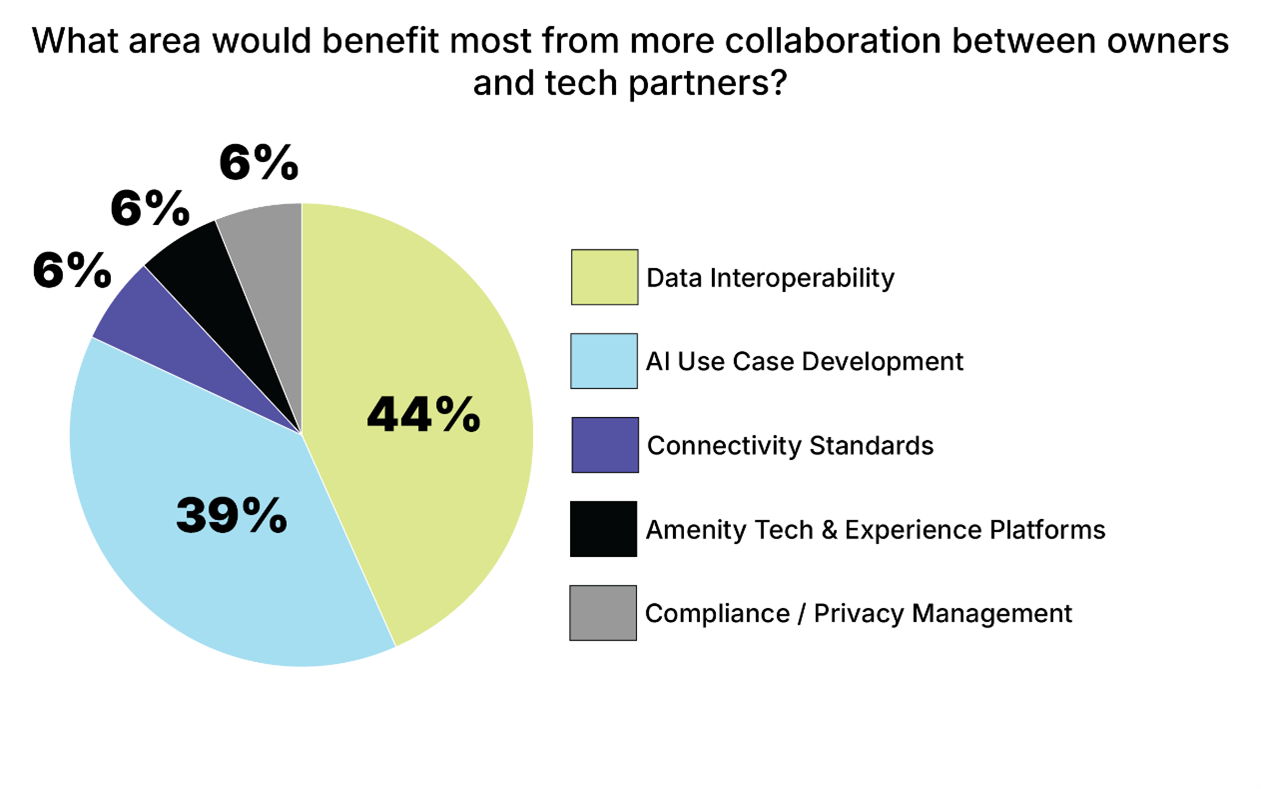
Effective innovation in multifamily housing is not achieved through isolated technology projects, but through strategic partnerships. It depends on collaboration between housing providers and technology partners to ensure that solutions meet real operational needs and avoid siloed implementations. Therefore, we asked Leadership Circle attendees about areas that would benefit most from these partnerships.
Most respondents believe data interoperability and AI use case development are areas where collaboration can drive meaningful progress. Close collaboration between owners and technology partners is critical to aligning data standards, integration requirements, and system architectures, which are foundational to interoperability. Similarly, co-developing AI use cases ensures solutions are grounded in real operational workflows, trained on relevant data and designed to solve practical business problems. This collaborative approach reduces implementation risk, accelerates adoption, and ensures technology directly supports day-to-day operations and the resident experience, while also providing technology partners with ongoing feedback to refine and improve their products.
 Source: Leadership Circle in-session polling, OPTECH 2025
|
Avenue5 Residential partnered with Bilt to implement their digital loyalty and rent rewards platform to enhance resident engagement, improve payment behavior, and standardize operational efficiencies across its national portfolio.
|
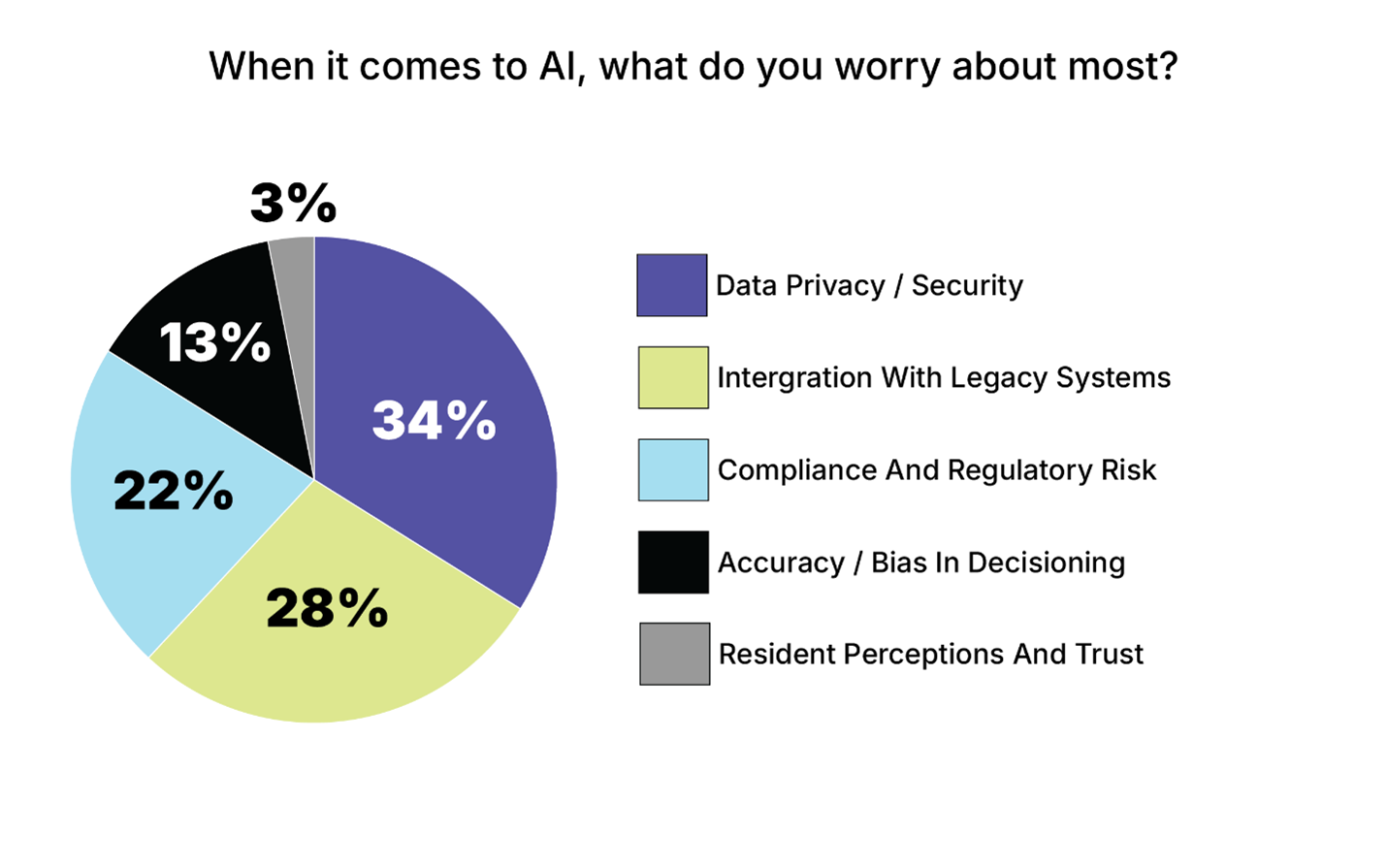
Respondents are actively experimenting with AI to improve operational efficiency and resident services, yet significant concerns around data privacy, security, legacy system integration, and internal expertise persist. These concerns highlight the need for structured governance and risk management as AI becomes more central to operations.
Without consistent governance frameworks and shared best practices, AI adoption risks becoming fragmented. Implementing standardized approaches, such as the RETTC AI Governance Framework, helps mitigate risks, protect sensitive data, and maximize AI’s value while ensuring compliance and operational alignment.
 Source: Leadership Circle in-session polling, OPTECH 2025
The themes in this report highlight that technology delivers the greatest value when it delivers measurable operational improvements, enhances data-driven decision-making, and fosters collaboration between housing providers and technology partners. Successful implementation depends not only on selecting innovative solutions but also on structured governance, thoughtful integration, and alignment with operational priorities.
As multifamily operators increasingly adopt AI, automation, and predictive analytics, the ability to integrate systems, standardize data, and embed governance frameworks will determine the scalability and reliability of these initiatives. By leveraging emerging tools and best practices, technology can transform renting into a more reliable, efficient, and satisfying experience for residents, while simultaneously empowering staff and enabling providers to scale operations with confidence.
 RETTC : May 19, 2026
Ahead of OPTECH 2026, three leaders share where technology is delivering real impact and what is coming next. Technology is redefining how housing is...
 Rick Haughey : Apr 16, 2026
At a time when AI capabilities are accelerating, multifamily is discovering that the real challenge isn’t the technology itself, but rather some very...
 Chris Moreno : Jul 24, 2026
So Why Are Real Estate & PropTech Just Now Catching Up in the AI Race? Every week, someone asks me a version of the same question: “What industries...